The Pasola Festival
Everything You Need to Know About Sumba's Most Sacred Ceremony
Every year between February and March, the green plains of West Sumba transform into an arena for one of the world's most extraordinary living cultural traditions. The Pasola is a mounted horseback battle where riders from opposing clans charge at each other hurling wooden spears. It is loud, fast, dangerous, and profoundly sacred. Blood must be spilled — it feeds the earth and ensures a good harvest. This is not a re-enactment. This is a ritual that has been performed in essentially the same way for over a thousand years.
The Pasola is governed by the Rato — Marapu priests who determine the exact timing based on the arrival of nyale, sea worms that emerge from the ocean on specific full moons. When the nyale appear, the Rato reads their colour and form to predict the coming harvest. If the nyale are fat and plentiful, the year will be abundant. Then the Pasola begins — not as celebration, but as sacrifice and offering to ensure the land's fertility.
The ceremony unfolds across four villages in the Kodi, Lamboya, Wanukaka, and Gaura districts of Southwest and West Sumba. Each village holds its Pasola on a different week, meaning the festival season stretches over approximately six weeks. The exact dates shift each year based on the lunar calendar and the nyale emergence. They are typically announced only weeks in advance — another reminder that this ceremony follows nature's schedule, not tourism's.
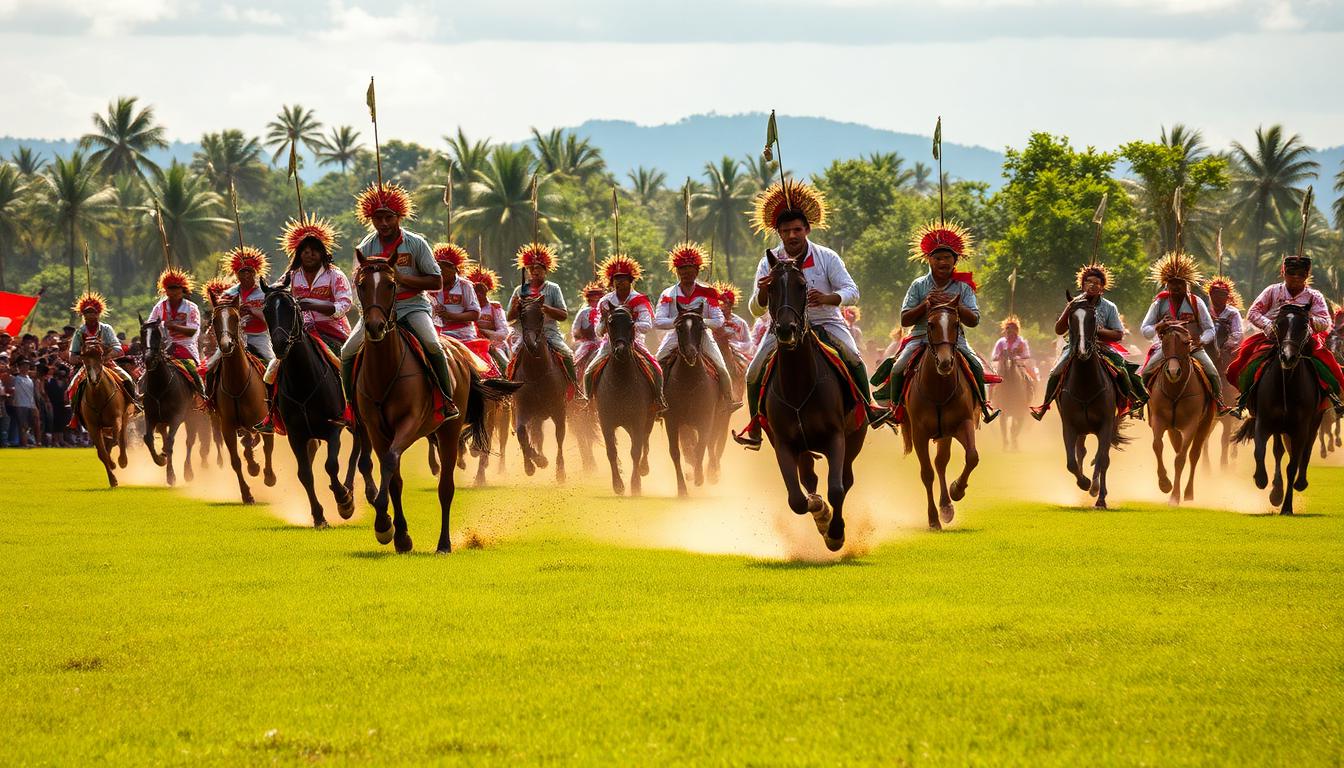
On the day of the Pasola, riders gather on opposing sides of a large flat field. They are dressed in traditional ikat textiles and headbands, mounted on the small, agile Sumbanese horses that have been bred for this purpose for centuries. The atmosphere is electric — hundreds of community members line the field, drums beat, and the air is thick with chanting and anticipation.
The jousting begins with a single rider charging across the field, hurling a blunted wooden spear at the opposing side. The response comes immediately. Within minutes, dozens of riders are crossing in both directions, spears flying, horses wheeling and dodging. The skill required is extraordinary — riders must throw accurately while controlling their horse at full gallop, simultaneously watching for incoming projectiles.
Injuries are common and expected. Blood drawn during the Pasola is considered an offering to the Marapu spirits and the land itself. In the past, deaths occasionally occurred. Today, wooden-tipped spears have reduced fatal injuries, but the physical danger remains real. This edge of genuine risk is part of what separates Pasola from performative cultural tourism — the stakes are actual, the emotions raw, the spiritual dimension palpable.
For visitors fortunate enough to witness the Pasola, several guidelines ensure respectful participation. First, attend with a knowledgeable local guide who can explain the spiritual context and navigate cultural protocols. Second, dress modestly and ask permission before photographing individuals or ceremonies. Third, understand that you are a guest at a sacred event, not an audience at a show. Your presence is tolerated and often welcomed, but the ceremony is not for you — it is for the land and the ancestors.
Getting there: Most Pasola ceremonies take place within a 1–3 hour drive of Tambolaka Airport. Accommodation in the area should be booked as soon as dates are announced, as the limited supply fills quickly. Several resorts and operators offer Pasola packages that include transport, guiding, and cultural briefings.
The Pasola is, in many ways, the purest expression of what makes Sumba unique. It is a place where the spiritual and physical worlds have not been separated by modernity. Where the relationship between humans and land is still governed by ceremony. Where bravery, honour, and sacrifice are not historical concepts but living values expressed through thundering hooves and flying spears. To witness it is to understand why Sumba matters.